How to Balance Garlic and Rosemary in Affordable Packed Lunches
Learn how much garlic and rosemary to use, how preparation changes their strength, and how to turn the pairing into inexpensive office lunches.
By HomeChefs Kitchen Team ·
Why garlic and rosemary can be tricky
Garlic and rosemary are natural partners, but both can dominate a packed lunch. Raw garlic becomes sharper as it sits, while rosemary’s woody, pine-like flavour can seem stronger once a dish has cooled. That matters for office lunches, which are often prepared the night before and eaten cold or reheated the next day.
The key is not simply using less. How you chop and cook each ingredient determines whether the result tastes rounded or harsh. Start with a modest amount, use fat to carry the aromas, then add acidity and salt for contrast.
A useful starting ratio
For two lunch portions, begin with:
- 1 medium garlic clove, finely sliced or lightly crushed
- 1 teaspoon finely chopped fresh rosemary leaves
- 2 tablespoons olive oil
- 1 to 2 teaspoons lemon juice or vinegar
- Salt and black pepper to taste
If using dried rosemary, start with ¼ to ½ teaspoon. Dried leaves are concentrated and need time to soften, so add them during cooking rather than sprinkling them over the finished meal.
Treat this as a flexible guide. Mild ingredients such as potatoes, beans and couscous can carry a little more seasoning. Delicate ingredients, including leafy salads and soft cheeses, need less rosemary. If the lunch will sit overnight, err on the restrained side with raw garlic.
Control the strength through preparation
For gentle garlic, slice it and cook it slowly in olive oil until fragrant and pale gold. Avoid dark browning, which makes garlic bitter. Whole crushed cloves also give a softer flavour and can be removed before packing.
For stronger garlic, mince, grate or crush it. Breaking more of the clove’s cells creates a sharper result. Raw grated garlic is particularly assertive and continues developing in a dressing, so half a clove may be enough for two portions.
For balanced rosemary, strip the leaves from the tough stem and chop them very finely. Large leaves can feel needle-like in a cold lunch and release sudden bursts of flavour. Cooking rosemary briefly in oil spreads its aroma more evenly through grains, beans or roasted vegetables.
A practical method is to warm the olive oil over low heat, add the rosemary for about 30 seconds, then add sliced garlic. Remove the pan from the heat when the garlic is fragrant but still lightly coloured. Toss this infused oil through the main ingredients.
How to correct an imbalance
If you have already added too much, build out the dish rather than trying to mask the flavour with extra salt.
When garlic is too strong:
- Add more of the main ingredient, such as chickpeas, pasta, potatoes or cooked grains.
- Stir in olive oil, yoghurt or a spoonful of soft cheese to soften the sharp edge.
- Add lemon juice or vinegar a few drops at a time. Acidity will not remove garlic, but it can make the overall flavour feel less heavy.
- If the garlic is still raw, gently cooking the mixture may mellow it.
When rosemary is too strong:
- Remove any visible sprigs or large pieces immediately.
- Increase the beans, grains or vegetables in the recipe.
- Add a small amount of sweetness from roasted carrots, squash or caramelised onion.
- Finish with lemon zest, parsley or black pepper to create a fresher aroma around the rosemary.
Do not keep adding garlic to “match” excessive rosemary, or vice versa. That usually produces a louder lunch rather than a balanced one.
An affordable mix-and-match lunch formula
Use the starting ratio to season a simple combination of one base, one protein-rich ingredient and two vegetables. This keeps costs manageable while letting you use whatever is already in the cupboard.
Choose from:
- Base: couscous, pearl barley, pasta, potatoes or brown rice
- Protein-rich ingredient: chickpeas, cannellini beans, lentils or crumbled cheese
- Vegetables: roasted carrots, onions, courgettes, mushrooms, cabbage or frozen peas
- Finish: lemon juice, parsley, toasted seeds or a spoonful of yoghurt
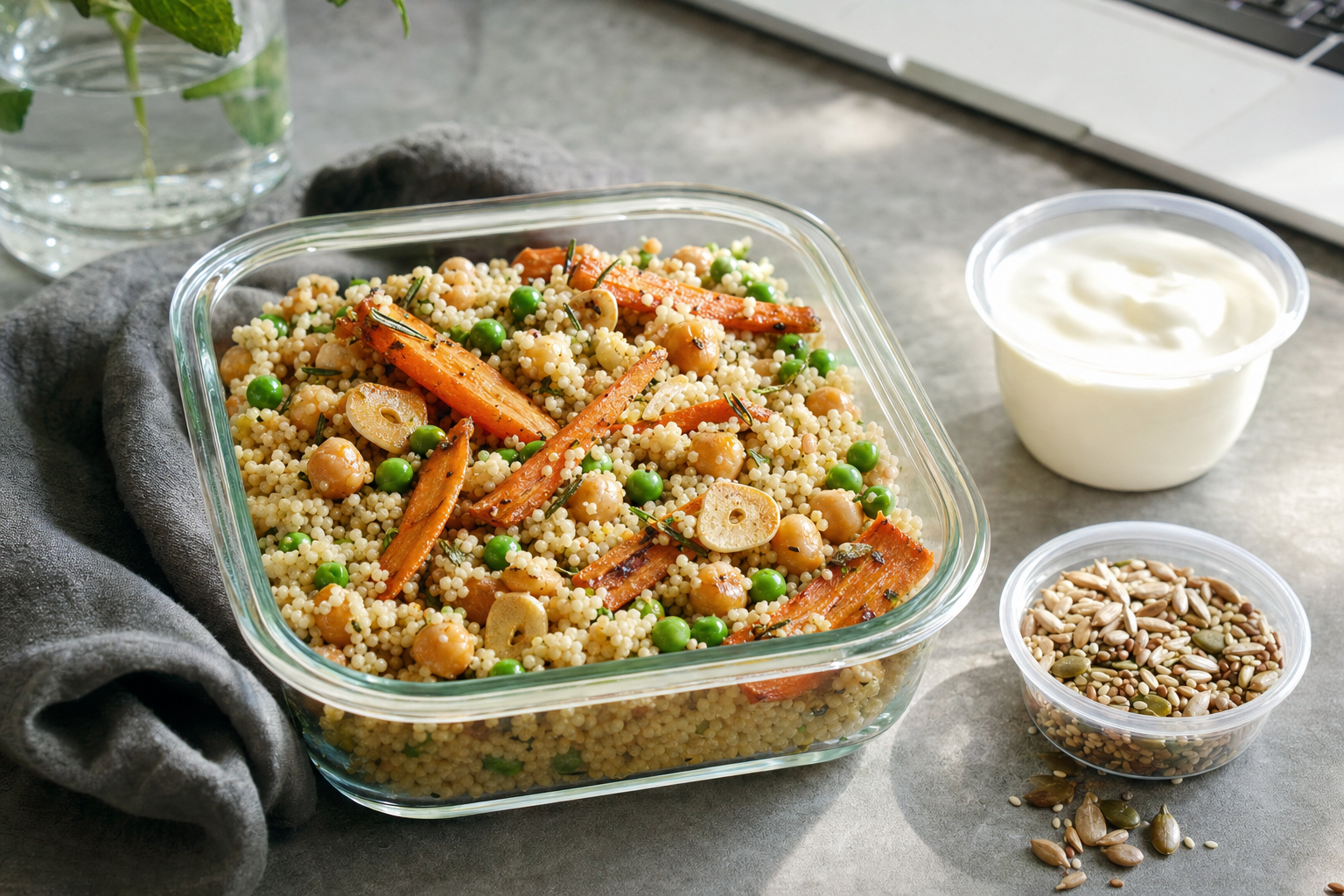
For example, toss cooked couscous with chickpeas, roasted carrots and peas. Fold through the warm garlic-rosemary oil, then add lemon juice and black pepper. Taste once warm and again after it has cooled: rosemary often becomes more noticeable at room temperature.
The same seasoning works with a white bean and potato salad. Keep the rosemary finely chopped, use sliced cooked garlic rather than raw garlic, and add a mustard-lemon dressing. For pasta, reserve a little cooking water and stir it into the infused oil so the seasoning coats the pasta instead of collecting at the bottom of the container.
Packing and storing your lunch
Let cooked grains, pasta and roasted vegetables stop steaming before sealing the container, then refrigerate them within two hours. Keep the lunch chilled until needed; use an insulated bag with an ice pack if there is no office fridge.
Fresh garlic stored in oil should not be left at room temperature. Make only what you need, refrigerate any extra infused oil promptly and use it within three days.
Pack crunchy toppings and yoghurt-based finishes separately. Add them just before eating so their texture and brightness can counter the deep garlic and rosemary flavours.
Finding a home-cooked alternative
If meal prep is not practical every week, HomeChefs can help you explore meals from independent home kitchens nearby. Availability varies by area, and each kitchen chooses whether to offer collection, delivery or both. Check individual listings for ingredients and collection or delivery details.
Written with AI assistance.