How to Cook Swiss Chard Croatian Style
Learn how to make Croatian-style Swiss chard with tender potatoes, garlic and olive oil. This simple Dalmatian dish is comforting beside soups, stews or grilled fish.
By HomeChefs Kitchen Team ·
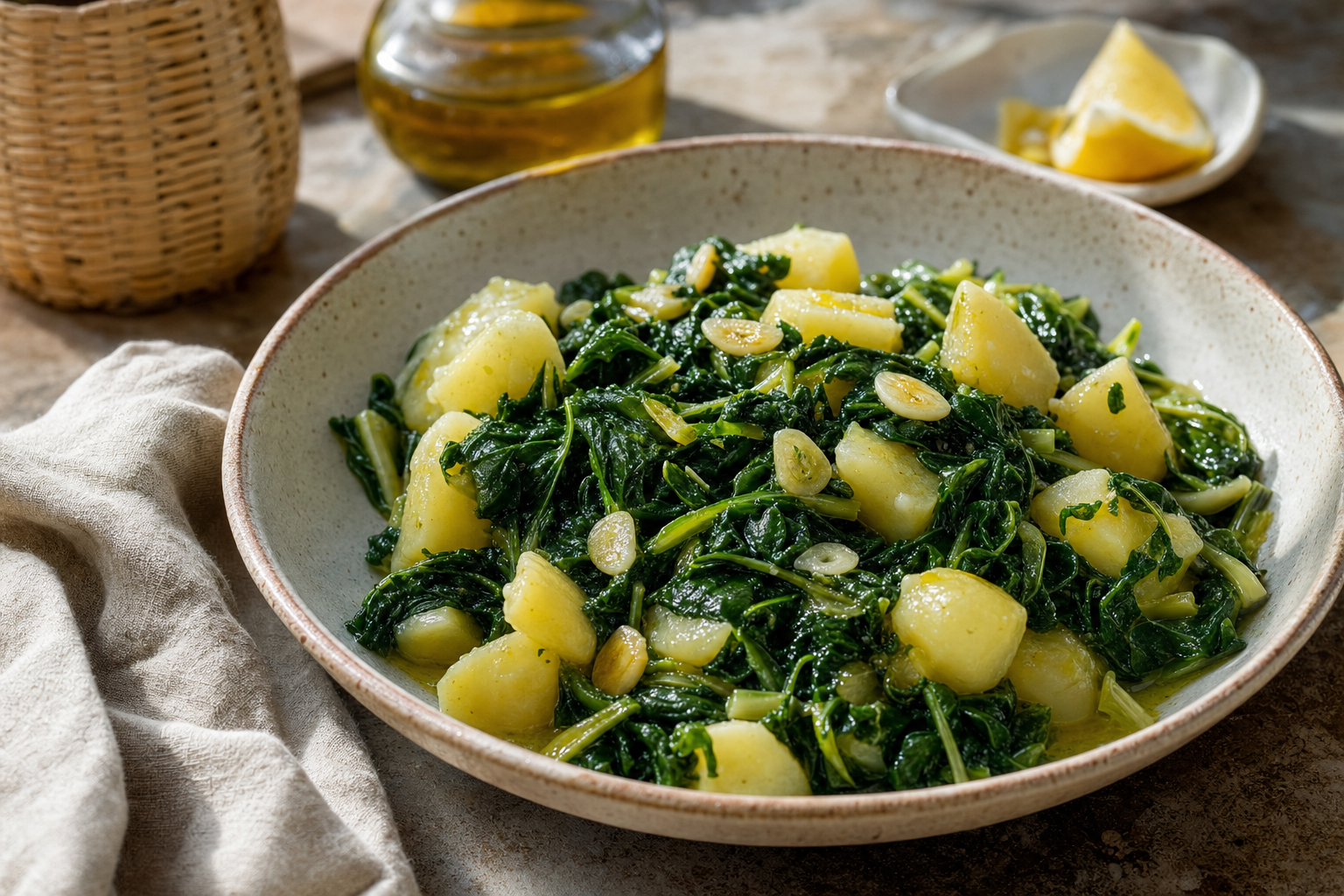
Croatian-style Swiss chard and potatoes
In coastal Croatia, Swiss chard is commonly prepared with potatoes, garlic and olive oil. The dish is known as blitva s krumpirom, meaning Swiss chard with potatoes, and is closely associated with Dalmatian cooking.
It is usually served as a side rather than a soup or stew, but its soft potatoes, silky greens and garlicky cooking juices make it especially welcome alongside brothy beans, seafood stews and other spoonable meals. The method is straightforward: boil the potatoes, add the chard in stages, drain well and dress everything generously while warm.
Ingredients
Serves 4 as a side.
- 700 g waxy or all-purpose potatoes
- 500 g Swiss chard
- 3 garlic cloves
- 60 ml extra-virgin olive oil
- 1 teaspoon fine salt, plus more for the cooking water
- Freshly ground black pepper
- 1 tablespoon chopped flat-leaf parsley, optional
- 1 lemon wedge, optional
Choose potatoes that hold their shape after boiling. Floury potatoes will still work, but they produce a softer, more rustic mixture. Both green and rainbow chard are suitable, although red stalks may tint the potatoes slightly.
Prepare the vegetables
Peel the potatoes and cut them into pieces about 3 cm wide. Keeping the pieces similar in size helps them cook evenly.
Wash the Swiss chard carefully because soil often collects around the stalks. Separate the leaves from the thicker stems. Slice the stems into pieces about 1 cm wide, then roughly chop the leaves. Keeping them separate matters: the firm stalks need more cooking time than the delicate leaves.
Finely chop or thinly slice the garlic. For a stronger garlic flavour, reserve a small amount to stir through at the end. For a gentler result, warm all of it briefly in the olive oil.
Cook the potatoes and chard
Place the potatoes in a wide saucepan and cover them with cold water by about 3 cm. Salt the water, bring it to a boil and reduce it to a steady simmer. Cook for 10 to 12 minutes, until the potatoes are beginning to soften but are not yet completely tender.
Add the sliced chard stems and simmer for another 4 minutes. Add the chopped leaves, pressing them into the water as they wilt. Cook for 3 to 5 minutes more. The potatoes should be easily pierced with a knife, the stalks should be tender and the leaves should remain green rather than turning dull and mushy.
Before draining, scoop out about 100 ml of the cooking water. Drain the vegetables thoroughly and let them sit in the colander for a minute so excess water can escape.
Add the garlic and olive oil
Return the empty pan to low heat. Add the olive oil and garlic, then stir for 30 to 60 seconds, just until fragrant. Do not let the garlic brown, as it can become bitter.
Return the potatoes and chard to the pan. Add the salt, several grinds of black pepper and 2 tablespoons of the reserved cooking water. Fold everything together gently, allowing a few pieces of potato to break at the edges. This small amount of crushed potato combines with the oil and water to create the characteristic silky coating.
Add another splash of cooking water if the mixture seems dry. Croatian-style chard should be moist and glossy, not watery. Taste and adjust the salt. Stir through the parsley if using, then leave the dish to stand for 5 minutes before serving so the potatoes can absorb the garlic and olive oil.
How to get the texture right
The best version sits between a dry potato side and a wet braise. These details help:
- Cook the ingredients in stages. Potatoes go in first, followed by the stalks and then the leaves.
- Drain thoroughly. Water clinging to the chard can dilute the olive oil and garlic.
- Save some cooking water. Its potato starch helps the dressing cling without making the dish greasy.
- Fold rather than mash. A few rough potato edges are useful, but most pieces should remain intact.
- Season while warm. Warm potatoes absorb the dressing more readily than cooled ones.
What to serve with blitva
Blitva is often paired with simply prepared fish, but it is versatile enough for a soup-and-side supper. Serve it with a tomato and white bean soup, a lentil stew or a light fish stew. Its mild flavour also works with grilled vegetables, roast peppers or a bowl of chickpeas simmered with tomatoes.
For a more substantial meat-free plate, spoon white beans over the chard and potatoes and finish with extra olive oil. Lemon is not essential, but a small squeeze can brighten the dish when it accompanies a rich stew.
Can it become a soup?
Traditional blitva is not a soup, but the same combination can form the base of a light, rustic bowl. After warming the garlic, add 750 ml of vegetable stock, the cooked potatoes and chard, then simmer for 5 minutes. Crush some of the potatoes against the side of the pan to give the broth body. Finish with olive oil and black pepper.
This variation keeps the familiar potato, chard and garlic profile while making it better suited to the soups-and-stews table. Cannellini beans can be added for a heartier meal, although they are an addition rather than part of the basic Dalmatian side dish.
Finding home-cooked Croatian food
If you would rather explore meals prepared by someone nearby, HomeChefs connects diners with independent home kitchens. Availability varies by area, and each kitchen decides whether to offer collection, delivery or both.
Written with AI assistance.