How to Make Goulash More Flavourful on a Weeknight
Build a richer goulash by browning the beef properly, softening the onions, blooming paprika gently and balancing the finished sauce with salt and acidity.
By HomeChefs Kitchen Team ·
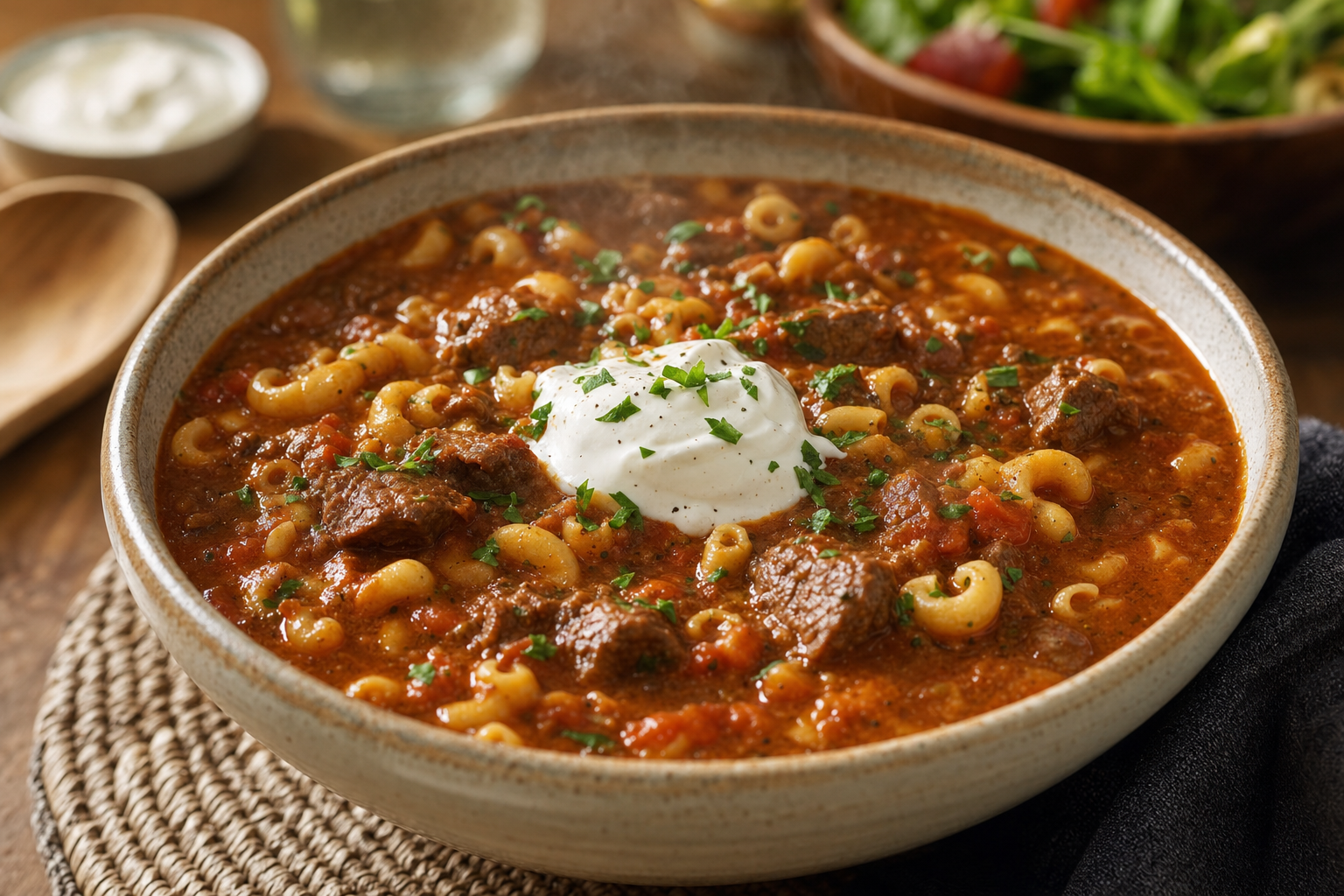
Goulash can taste flat when everything goes into the pan at once. The answer is not necessarily more seasoning. Better flavour comes from building distinct layers, concentrating the tomato base and making a few final adjustments before serving.
The word goulash can mean different dishes. Hungarian-style goulash is usually a paprika-rich beef soup or stew, while American goulash combines minced beef, tomato sauce and macaroni. The same core techniques improve both, although the cooking times differ.
Brown the beef instead of steaming it
Deep browning gives beef a savoury, roasted character. Heat a wide, heavy pan until properly hot, add a thin layer of oil and cook the beef in batches if necessary. Crowding the pan traps steam and leaves the meat grey.
For minced beef, spread it across the pan and leave it undisturbed for two or three minutes before breaking it apart. This creates browned edges rather than small, uniformly soft pieces. Spoon away excess fat if there is a large amount, but leave enough to cook the onions and carry the paprika flavour.
Beef chunks should also be dried before browning. Moisture on the surface slows colour development. Brown two or three sides, then remove the pieces while you prepare the sauce.
Minced beef should reach 71°C at its thickest point. In a loose goulash, check several of the largest clumps with a food thermometer.
Give the onions enough time
Onions provide sweetness and body, especially in Hungarian-style goulash. Cook them over medium heat with a pinch of salt until soft and golden, usually 8 to 12 minutes. If they start catching too quickly, lower the heat and add a small splash of water.
Add garlic only for the final minute so it does not burn. Finely diced red pepper, carrot or celery can go in with the onions for extra depth, but avoid adding so many vegetables that they dilute the paprika and beef.
Use paprika carefully
Paprika is central to goulash, but it can become bitter when scorched. A useful combination is sweet paprika for body and a smaller amount of smoked or hot paprika for complexity.
Once the onions are soft, take the pan off the heat briefly. Stir in the paprika for about 20 seconds, then immediately add tomato purée, chopped tomatoes or stock. This wakes up the spice without burning it.
For a family-sized pan, start with:
- 2 tablespoons sweet paprika
- ½ teaspoon smoked paprika, if liked
- ¼ teaspoon hot paprika or chilli flakes, adjusted for the table
- 1 teaspoon dried marjoram or oregano
- 1 teaspoon caraway seeds, lightly crushed, for a more Hungarian profile
Check that the paprika is still fragrant before using it. An open jar that smells dusty will not add much, however generous the spoonful.
Concentrate the tomato base
Tomato purée tastes richer after brief cooking. Push the softened onions to one side, add 1 to 2 tablespoons of purée and cook it for about a minute, stirring until it darkens slightly. Deglaze the pan with beef stock, scraping up the browned residue from the bottom.
Stock usually contributes more flavour than water, but choose a lower-salt version so the sauce can reduce without becoming overly salty. Worcestershire sauce is particularly helpful in American-style goulash; start with 2 teaspoons. A teaspoon of soy sauce can serve a similar purpose without making the dish taste distinctly soy-based.
Allow the beef, vegetables and tomato sauce to simmer before adding macaroni. Even 10 minutes helps the flavours come together and softens the raw edge of canned tomatoes.
Control the liquid and pasta
A watery goulash will taste weaker. Add stock gradually and simmer uncovered when the sauce needs concentrating. For a stew with beef chunks, cover the pan for most of the cooking time, then uncover it near the end. The beef is ready when a fork slides in easily and the pieces no longer feel springy or tough.
For American goulash, pasta absorbs both liquid and seasoning. Stir in about 250 g macaroni only after the sauce tastes well seasoned. Keep the pan at a gentle simmer and stir regularly, adding hot stock in small amounts if the pasta becomes dry before it is tender.
If you expect leftovers, cooking the pasta separately prevents it from swelling and soaking up the sauce overnight. Combine each portion when serving.
Balance the finished goulash
Taste only after the sauce has reduced. Then decide what is missing:
- Flat or muted: Add salt in small pinches.
- Heavy or overly rich: Stir in 1 teaspoon red wine vinegar or lemon juice.
- Too sharp from tomatoes: Simmer longer before adding sugar. If needed, use only a small pinch.
- Too thin: Simmer uncovered rather than adding flour immediately.
- Too spicy: Add more tomato sauce or serve with soured cream.
- Not savoury enough: Add a little Worcestershire sauce, then simmer for two minutes and taste again.
Fresh parsley, a spoonful of soured cream or a little lemon zest can brighten each bowl. Add these at the table so their flavour remains fresh.
Make the weeknight version work for your family
For faster dinners, use minced beef or small beef pieces rather than large stewing chunks. Chop the onions and vegetables ahead, and mix the dry spices in a small container. The finished sauce can be refrigerated in a covered container for up to three days; cool and refrigerate it within two hours, then reheat until steaming throughout.
If cooking is not on the evening's plan, HomeChefs connects customers with independent home kitchens. Availability varies by area, and each kitchen decides whether meals are offered for collection, delivery or both.
Written with AI assistance.