How to Prepare Artichokes Dalmatian Style
Learn how to trim, fill and gently braise artichokes with garlic breadcrumbs, peas, broad beans and potatoes for a comforting Dalmatian-style stew.
By HomeChefs Kitchen Team ·
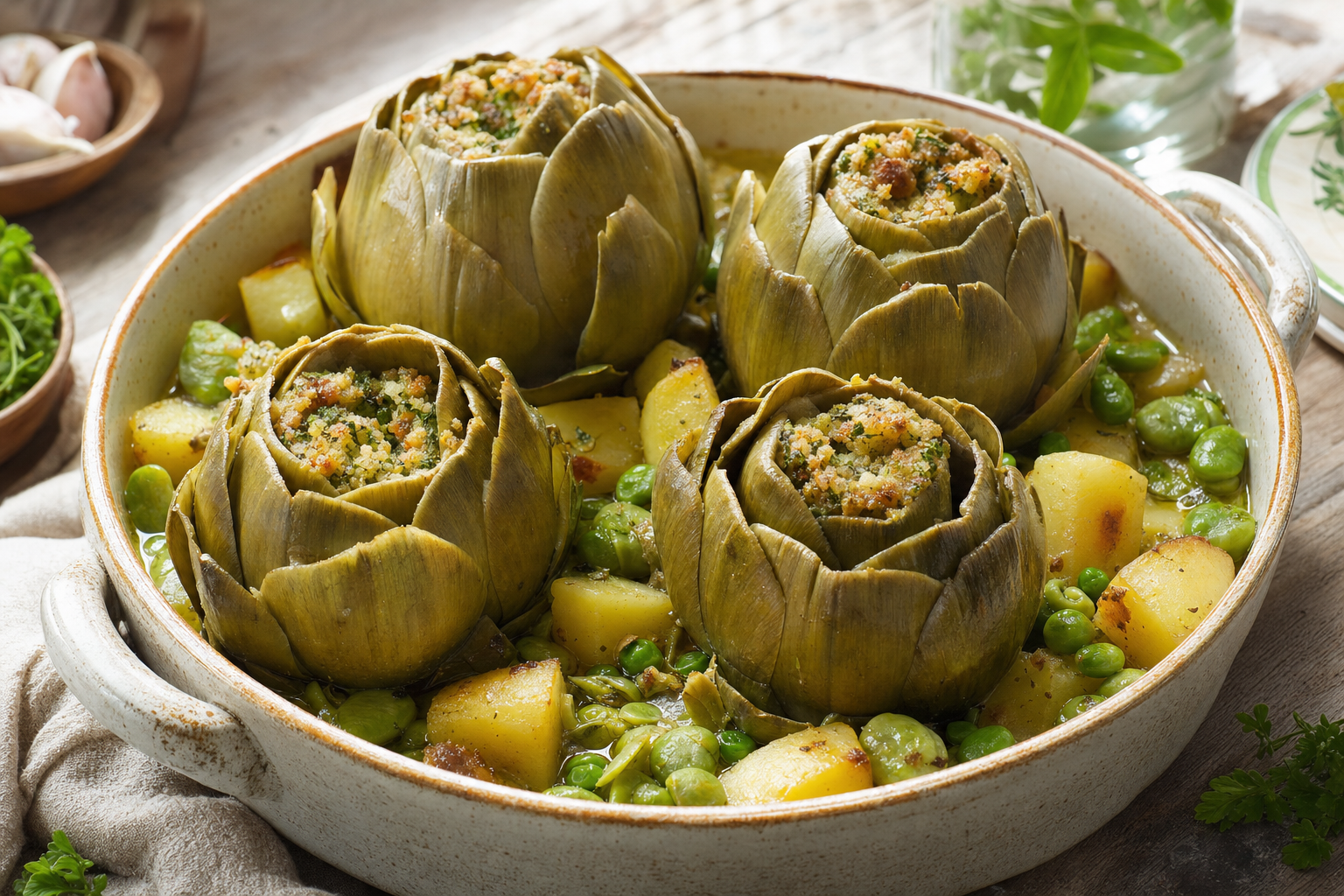
What are Dalmatian-style artichokes?
Dalmatian-style artichokes are gently braised rather than boiled and served separately. The trimmed heads are opened, filled with a fragrant mixture of breadcrumbs, garlic, parsley and olive oil, then cooked upright among spring vegetables. Peas, broad beans and potatoes turn the cooking liquid into a light, satisfying stew.
Recipes vary across Dalmatia and from one household to another. Some cooks use only peas or broad beans, while others add potatoes for a more substantial meal. White wine may be included, but water or vegetable stock also works well. The defining details are the filled artichokes, plenty of olive oil and slow cooking in a wide pot.
Ingredients for four servings
- 4 medium globe artichokes
- 1 lemon
- 80 g fresh breadcrumbs
- 3 garlic cloves, finely chopped
- 20 g flat-leaf parsley, finely chopped
- 75 ml extra-virgin olive oil
- 300 g shelled fresh or frozen broad beans
- 250 g fresh or frozen peas
- 400 g waxy potatoes
- 100 ml dry white wine, optional
- 500–700 ml vegetable stock or water
- 1 teaspoon fine salt, plus more to taste
- Black pepper
Choose artichokes that feel heavy for their size, with compact leaves and stems that look fresh rather than dry. Smaller spring artichokes are generally more tender and fit neatly into a shallow casserole.
How to clean and trim the artichokes
Fill a bowl with cold water and squeeze in half the lemon. Keep the other half for rubbing over cut surfaces. Artichokes darken quickly once trimmed, so prepare them one at a time.
- Pull away the small, tough leaves around the base.
- Cut off the stem, leaving about 2 cm attached so the artichoke can stand upright. Peel the remaining stem with a small knife or vegetable peeler.
- Slice approximately 2 cm from the top of the artichoke.
- Snip the sharp tip from each remaining outer leaf with kitchen scissors.
- Rub all cut surfaces with lemon, then place the artichoke in the lemon water while preparing the others.
Spread the leaves gently with your thumbs to create room for the filling. If the artichokes are large and mature, use a teaspoon to remove the hairy choke from the centre without breaking the base. Young, tightly closed artichokes may have little or no developed choke.
Make the garlic breadcrumb filling
Combine the breadcrumbs, garlic and parsley in a bowl. Add 45 ml of the olive oil, a pinch of salt and several grinds of black pepper. Mix until the crumbs are evenly moistened but still loose. If they seem dry and dusty, add another small splash of oil.
Drain the artichokes and shake out excess water. Spoon the mixture into the centre and between the leaves, starting near the middle and working outwards. Fill them generously without forcing the leaves apart. Reserve any leftover crumbs to scatter over the vegetables.
Build the stew
Peel the potatoes and cut them into pieces about 3 cm wide. Pour the remaining olive oil into a wide, heavy casserole or deep sauté pan. Arrange the filled artichokes upright in a single layer, choosing a pan that holds them fairly snugly so they do not fall over.
Tuck the potatoes around the artichokes, followed by the broad beans and peas. Sprinkle over any remaining breadcrumb mixture. Pour in the wine, if using, then add enough stock or water to reach roughly two-thirds of the way up the artichokes. The tops should remain above the liquid.
Season the broth lightly. It will reduce during cooking, so it is better to adjust the salt at the end.
Braise until tender
Bring the liquid to a gentle simmer over medium heat. Cover the pan, reduce the heat to low and cook for 35–50 minutes. Spoon some of the broth over the artichokes two or three times as they braise, helping the filling stay moist.
The dish is ready when a leaf pulls away without resistance and its fleshy base is tender when scraped with a fork. A small knife should also slide easily into the heart and potatoes. Larger or older artichokes may need another 10 minutes. Add a little hot water if the pan begins to dry before they soften.
For a slightly fuller broth, crush two or three potato pieces against the side of the pan and stir them into the liquid. Taste, then add salt, pepper or a squeeze of lemon as needed. Let the stew stand off the heat for 10 minutes so the breadcrumbs settle and the flavours come together.
How to serve and eat it
Place one upright artichoke in each shallow bowl and spoon the vegetables and broth around it. Finish with parsley and a thin drizzle of olive oil. Bread is useful for soaking up the garlicky cooking liquid, although the potatoes already make this a complete meal.
Pull off the outer leaves one at a time and scrape the tender flesh from their bases with your teeth. As the leaves become softer, more of each one will be edible. Once you reach the centre, remove any remaining fibrous choke and cut into the tender heart and stem.
Leftovers can be refrigerated in their cooking liquid once cooled, then gently reheated in a covered pan with a splash of water. They are also pleasant at room temperature, when the olive oil, lemon and garlic become especially noticeable.
Finding home-cooked regional dishes
If you would rather discover what neighbours are making, browse HomeChefs for meals offered by independent home kitchens near you. Availability varies by area, and each kitchen decides whether it provides collection, delivery or both.
Written with AI assistance.