How to Store Fresh Swiss Chard
Keep Swiss chard crisp by storing it cold, dry and loosely wrapped. Here is how to prepare it for the fridge, revive wilted leaves and freeze any surplus.
By HomeChefs Kitchen Team ·
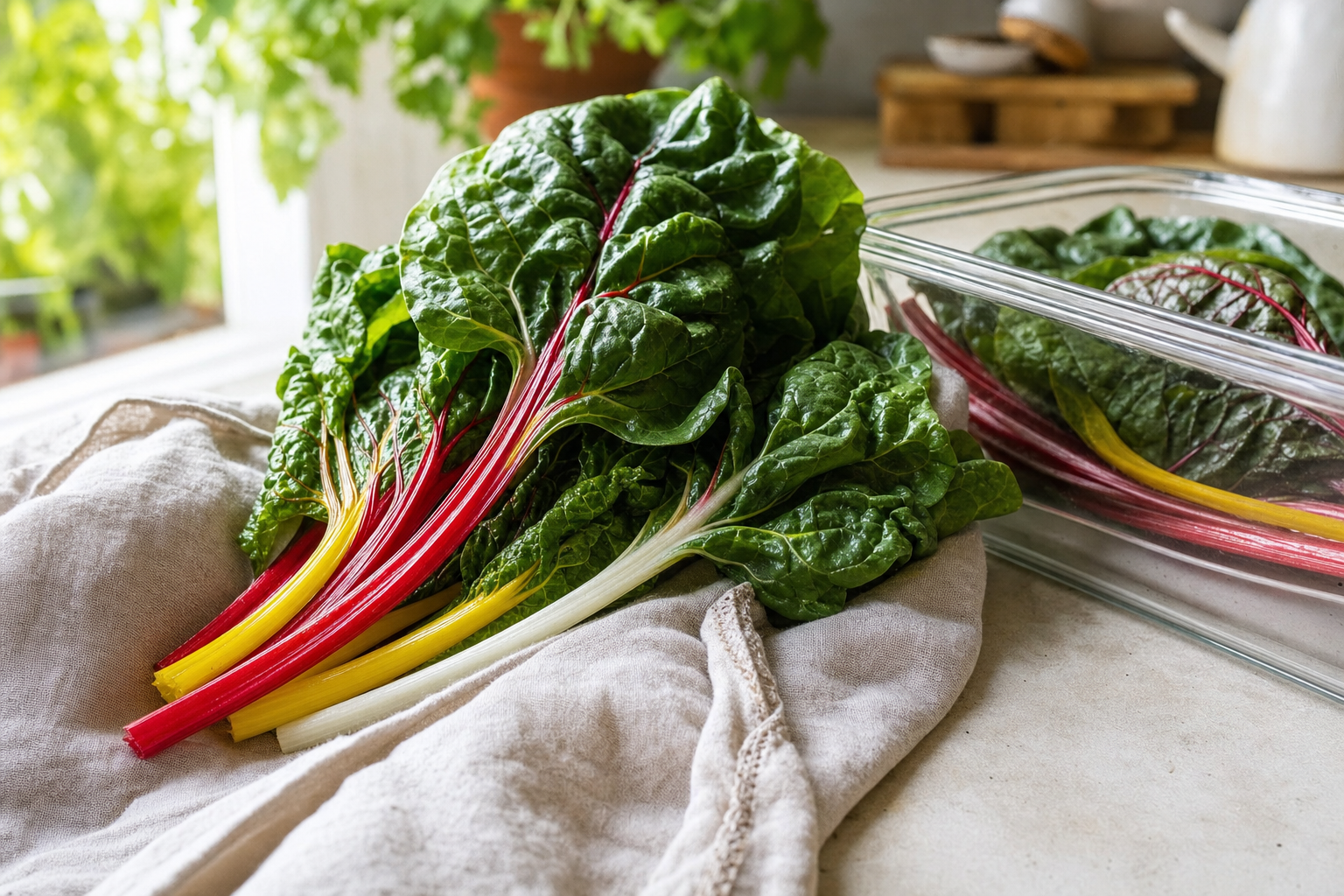
Swiss chard is at its best when the leaves are firm and the stalks have a clean snap. Like many seasonal greens, however, it loses moisture quickly after picking. The right storage method can slow that process and give you more time to use both the leaves and colourful stems.
The best way to refrigerate Swiss chard
For short-term storage, keep Swiss chard unwashed in the fridge. Excess water trapped around the leaves encourages soft, slippery patches, so it is better to wash the bunch shortly before cooking.
- Remove any bands or tight ties so they do not bruise the stalks.
- Check the bunch and discard leaves that are already slimy or badly damaged.
- Wrap the chard loosely in a clean tea towel or kitchen paper. The wrapping should absorb condensation without pressing on the leaves.
- Place it in a reusable food-storage bag or lidded container, leaving a little room for air rather than compressing it.
- Store it in the vegetable drawer, away from the cold back wall of the fridge, where delicate leaves may freeze.
Fresh chard is generally best used within three to five days. Very fresh, just-picked chard may remain crisp for longer, while a supermarket bunch that has already spent time in transit may wilt sooner. Check it daily rather than relying only on the date.
If the kitchen paper becomes wet, replace it. If it remains completely dry while the leaves begin to droop, lightly dampen the paper; it should feel barely moist, not saturated.
Should you wash chard before storing it?
Leaving chard unwashed is the simplest option. If you prefer to clean it in advance, rinse the leaves and stalks under cool running water, paying attention to the grooves in the stems and any folds near the base.
Dry everything thoroughly in a salad spinner or between clean tea towels. Water droplets left on the leaves shorten their useful storage time. Once dry, wrap and refrigerate the chard as described above.
Do not cut the leaves until you need them. Whole leaves have fewer exposed edges and tend to hold their texture better than chopped chard.
Can chard be stored upright in water?
A freshly harvested bunch with long stalks can be treated a little like herbs. Trim a thin slice from the base, stand the stalks in a jar containing about 2–3 cm of cold water, and cover the leaves loosely with a reusable bag. Keep the jar in the fridge and change the water daily.
This method is most useful when the bunch fits comfortably on a fridge shelf. It is less practical for short, crowded or damaged stems, which are better wrapped and stored in the vegetable drawer. Make sure only the stem ends sit in the water; submerged leaves can deteriorate quickly.
How to revive wilted Swiss chard
Chard that is limp but not spoiled can often be refreshed. Trim the stem ends and place the leaves in a large bowl of very cold water for 10–20 minutes. Drain and dry them well before cooking or returning them to the fridge.
This works when the chard has lost moisture. It will not reverse decay. Discard chard with widespread slime, a sour or rotten smell, mould, or leaves that have turned to mush. Small dry or yellowed areas can simply be trimmed away if the rest of the bunch is sound.
Storing leaves and stalks separately
The leaves cook much faster than the stalks, so separating them during meal preparation can be useful. Cut along each side of the central rib, stack the leaves and keep the two parts in separate covered containers in the fridge.
Use cut leaves promptly, ideally within a couple of days. The stalks are firmer and may hold their texture a little longer. Slice them for sautés, gratins, soups or pasta sauces; use the leaves in the same dish later in the cooking time.
How to freeze Swiss chard
Freezing is a practical choice when you have more chard than you can use while fresh. Blanching helps preserve its colour and texture better than freezing raw leaves.
- Wash the chard thoroughly and separate the stalks from the leaves.
- Chop both into useful cooking-size pieces.
- Bring a large pan of water to the boil.
- Blanch the stalks for about 2 minutes, then add the leaves for the final 1 minute.
- Transfer everything immediately to a bowl of iced water to stop the cooking.
- Drain thoroughly and press out excess water without crushing the chard.
- Pack into labelled freezer bags or containers in recipe-sized portions, removing as much air as practical.
Frozen chard will be softer after thawing, so reserve it for cooked dishes rather than salads. It can usually go straight from the freezer into soups, stews, curries and pasta sauces. Smaller, flatter packs are easier to stack and quicker to portion.
Make the most of seasonal chard
When buying chard, look for lively leaves without extensive yellowing and stalks that feel firm rather than bendy. Red, yellow, pink and white-stemmed varieties can all be stored in the same way.
Planning one dish for the leaves and another for the stalks helps prevent waste. If you would rather enjoy seasonal vegetables without preparing every meal yourself, check HomeChefs for options from independent home kitchens near you. Availability varies by area, and each kitchen chooses whether to offer collection, delivery or both.
Written with AI assistance.