Sweet vs smoked paprika in goulash: which works best?
Sweet paprika gives goulash its classic warmth and colour, while smoked paprika adds a deeper, fireside note. Here is how to choose and combine them for dinner.
By HomeChefs Kitchen Team ·
The short answer
For a classic Hungarian-style beef goulash, sweet Hungarian paprika should be the main spice. It has a warm, rounded, gently fruity flavour that supports the beef and onions without making the stew taste smoky.
Smoked paprika is not a direct substitute. It brings a pronounced wood-smoke flavour associated more closely with Spanish pimentón. That can be delicious, but too much may dominate the onions, beef and caraway.
For a dependable weeknight family dinner, use mostly sweet paprika. If your family enjoys smoky flavours, replace a small portion with smoked paprika rather than swapping the full amount.
How the two types taste in goulash
Sweet paprika is mild, earthy and subtly fruity. Despite the name, it does not make the stew sugary. Its sweetness is closer to the flavour of ripe red peppers. It also provides the familiar brick-red colour expected in paprika-rich stews.
Smoked paprika is made from peppers dried over smoke. Depending on the jar, it may taste gently toasted or powerfully smoky. In goulash, it can suggest a pot cooked over a fire, but it can also cover the flavour of the beef when used by the tablespoon.
There is another distinction to watch: paprika can be sweet, hot or smoked, and smoked varieties may themselves be sweet or hot. Check the label before adding it to a child-friendly dinner.
The best ratio for a family goulash
For a pot serving four to six people, a useful starting point is:
- 2 tablespoons sweet Hungarian paprika
- ½ teaspoon smoked paprika, optional
- ¼ to ½ teaspoon caraway seeds, lightly crushed, optional
This produces a paprika-forward stew with just a quiet smoky background. For a more noticeable effect, increase the smoked paprika to 1 teaspoon. Taste before adding more: smoke builds quickly and becomes stronger as the sauce reduces.
If smoked paprika is all you have, begin with 2 teaspoons rather than using the full quantity intended for sweet paprika. Add more near the end if needed. The result will not taste the same as one made with sweet Hungarian paprika, but restraint keeps it balanced.
How to add paprika without making it bitter
Paprika can scorch easily. A burnt spoonful will make the entire pot taste harsh, so avoid sprinkling it into fiercely hot fat and leaving it to fry.
For a simple weeknight method:
- Soften chopped onions in a little oil over medium heat until golden and sweet, around 10 minutes.
- Add garlic, if using, and cook briefly.
- Take the pan off the heat or turn it to low.
- Stir in the sweet paprika and any smoked paprika for about 20 seconds.
- Immediately add chopped tomatoes, stock or water, then return the pan to the heat.
This short contact with the warm oil releases the paprika’s flavour and colour without burning it. When browning beef separately, add it in batches so the pieces sear rather than steam. Lower them into the oil carefully to avoid splashes.
A flexible weeknight goulash formula
Use about 800 g stewing beef, cut into 3 cm pieces, with 2 large onions, 2 tablespoons sweet paprika, 500 ml stock or water, and your choice of garlic, caraway, tomato and diced pepper.
Brown the beef, then soften the onions in the same casserole. Add the paprika using the low-heat method above, return the beef and pour in enough liquid to come most of the way up the meat. Simmer gently with the lid slightly ajar until the beef is fork-tender, usually 1½ to 2 hours depending on the cut. The sauce should bubble lazily rather than boil hard. Tough or chewy beef needs longer, not higher heat.
For a faster dinner, prepare the stew the evening before and reheat it gently. The paprika and onion flavours often become more integrated after resting. Cool leftovers promptly, refrigerate them in a covered container and use within three days. Reheat until steaming throughout.
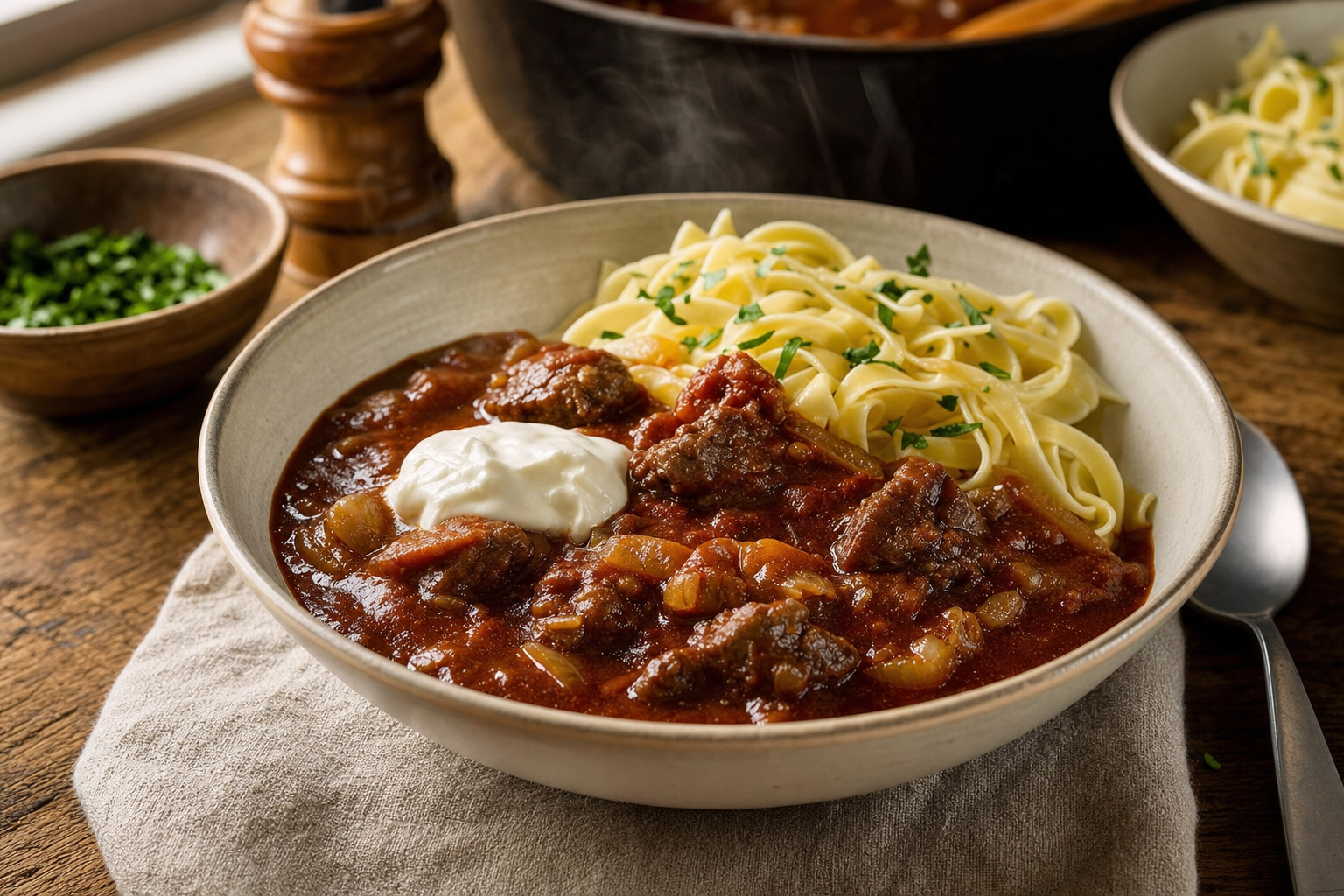
Serve with boiled potatoes, buttered noodles, small dumplings or crusty bread. A spoonful of soured cream can soften the flavour for children or anyone sensitive to strong seasoning.
What if the goulash tastes too smoky?
Add more unsalted stock or water and let the stew simmer briefly. Extra softened onion, cooked potato or a little tomato can also spread the smoky flavour through a larger volume. Soured cream added at the table rounds off the edges, though it will not remove the smoke completely.
Avoid trying to correct it with sugar. Sweetness can make the sauce taste muddled without solving the underlying imbalance.
If the stew tastes flat rather than smoky, it may need salt, more sweet paprika or a small splash of vinegar at the end. Add paprika carefully: stir it into a little warm cooking liquid first, then return that mixture to the pot so the powder does not form dry clumps.
Choosing paprika at the shop
Look for Hungarian sweet paprika or édesnemes when you want the traditional warm character. A standard mild paprika can work, but it may be less aromatic. Keep the jar sealed away from heat and direct light, and replace it when the powder smells dusty rather than peppery.
The practical verdict is simple: choose sweet paprika as the foundation and treat smoked paprika as an accent. That gives a family goulash depth without allowing smoke to take over.
If cooking from scratch is not on tonight’s plan, HomeChefs connects neighbours with meals from independent home kitchens. What is available depends on kitchens near you, and each kitchen chooses whether to offer collection, delivery or both.
Written with AI assistance.