The Best Spices for Čobanac, Plus Safer Leftovers
Build čobanac around sweet and hot paprika, then support it with bay, black pepper and garlic. Here is how to balance the seasoning and store the stew safely.
By HomeChefs Kitchen Team ·
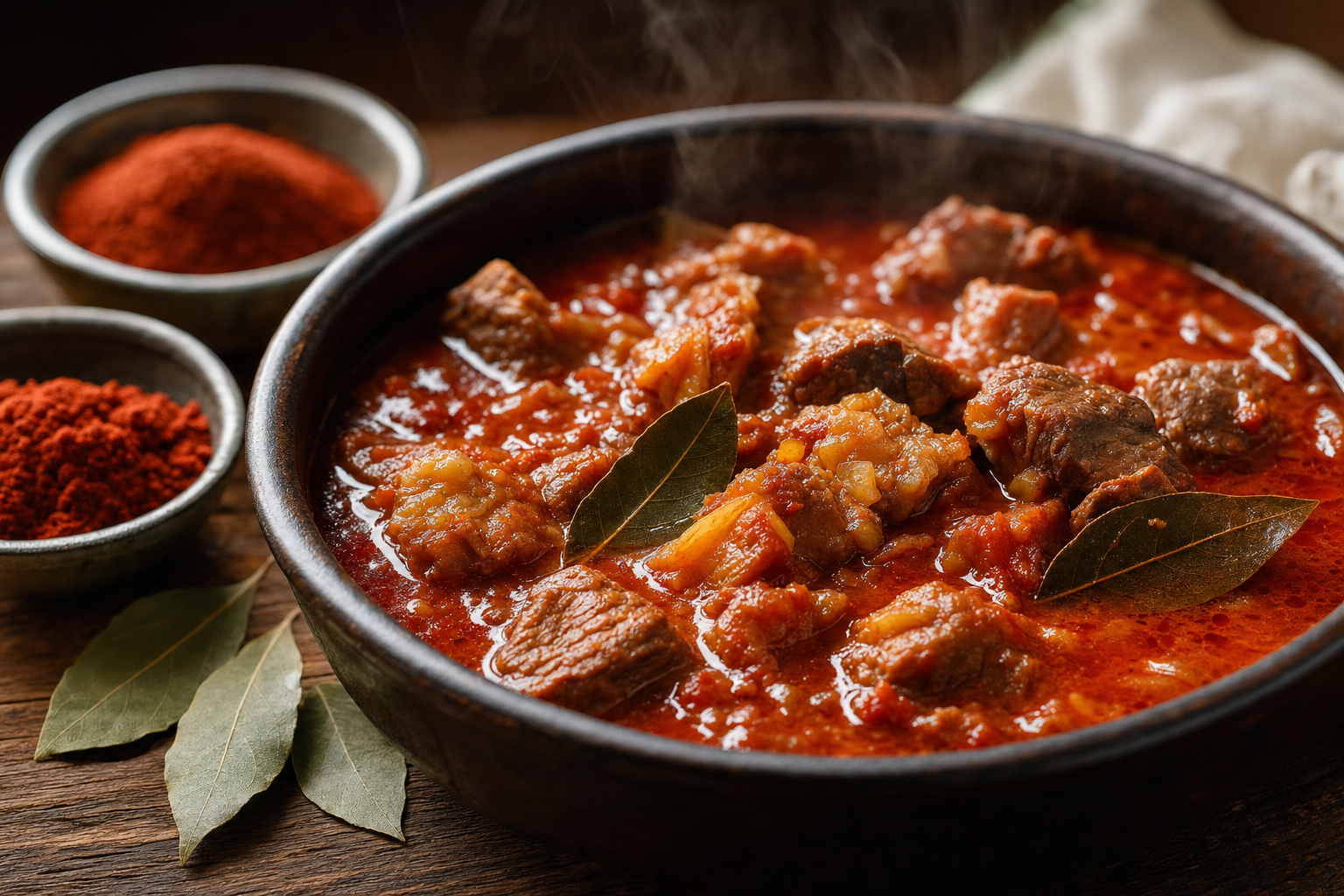
What gives čobanac its character?
Čobanac is a robust Croatian meat stew associated with Slavonia and Baranja. Recipes vary by cook, occasion and available meat, but the seasoning usually centres on ground paprika rather than a long list of competing spices.
A balanced pot should taste deeply savoury, warmly peppery and as hot as you want it, without becoming bitter. The best approach is to begin with sweet paprika, add hot paprika gradually, then use bay leaves and black pepper to give the stew depth.
The essential spices
For a pot serving about six people, this is a practical starting point:
- Sweet paprika: 2–3 tablespoons. This provides the familiar red colour and rounded pepper flavour. Choose fresh paprika with a vivid colour and sweet aroma; an old, dusty jar will produce a flat stew.
- Hot paprika: ¼–1 teaspoon. Add it according to its strength and your preferred heat level. It is much easier to add more near the end than to rescue an overpoweringly hot pot.
- Bay leaves: 2–3. Bay adds a subtle herbal backbone during the long simmer. Remove the leaves before serving or storing portions.
- Freshly ground black pepper: ½–1 teaspoon. Add some during cooking and adjust at the end, when the sauce has reduced.
- Salt: as needed. Salt the meat and onions lightly at first, then make the final adjustment after simmering. Stock, cured meat or seasoning blends can already contain plenty of salt.
Garlic is technically an aromatic rather than a dried spice, but it belongs naturally in the flavour profile. For six servings, 3–5 finely chopped cloves will support the paprika without dominating it.
Optional seasonings to use carefully
Čobanac rewards restraint. Optional additions can be useful, but they should not obscure the paprika or the flavour of the meat.
- Smoked paprika can replace a small part of the sweet paprika if you want a smoky note. Keep it to roughly one-quarter of the total paprika so the stew does not taste like barbecue sauce.
- Crushed dried chilli adds sharper heat than hot paprika. Use a small pinch and allow it to simmer before deciding whether to add more.
- Caraway gives an earthy, slightly anise-like edge. A pinch is enough for a large pot.
- Dried marjoram can add gentle herbal warmth, particularly in pork-heavy versions. Rub a small pinch between your fingers before adding it near the end.
Tomato paste, onions and wine may contribute flavour in some versions, but they are not substitutes for good paprika. Too much tomato can push the stew towards a generic tomato-based meat sauce.
How to add paprika without burning it
Paprika can turn bitter when exposed to very high heat. Cook the onions and meat first, then reduce the heat before adding the paprika. Stir it through the fat and aromatics for about 20–30 seconds, just until fragrant, and immediately add liquid.
Alternatively, take the pot off the heat briefly while stirring in the paprika. This is especially helpful when cooking in a heavy pot that retains heat. Add bay leaves once the liquid goes in, then let the stew simmer gently rather than boiling it aggressively.
Taste in stages. Check the salt and heat halfway through cooking, but leave the final adjustment until the meat is tender and the sauce has reduced. If the stew is too hot, add more unsalted cooking liquid and allow the flavours to settle; sugar tends to make the balance muddled rather than fixing the problem.
Cooking the meat safely
Čobanac may contain beef, pork, game or a mixture. Cut the meat into similarly sized pieces so it cooks evenly. Keep the stew at a steady simmer until the largest pieces are tender and have reached at least 75°C at the centre. Insert a clean thermometer into a large piece without touching the pot.
Temperature confirms safety, but stew meat also needs time for its connective tissue to soften. If it has reached temperature but remains tough, continue simmering gently until a piece yields easily to a fork.
Cooling and storing leftover čobanac
Large pots of dense stew cool slowly, so do not place a deep, steaming pot straight into the refrigerator. Remove the bay leaves, transfer the leftovers into clean, shallow containers and refrigerate them within 2 hours. Leave a little space between containers until they are cold, then cover them securely. Keep the refrigerator at 5°C or below.
Eat refrigerated čobanac within 3–4 days. If that is unlikely, freeze portions as soon as they are cool. For the best texture, use frozen stew within about 3 months. Label each container with the date.
Dumplings or noodles can soften while stored, so refrigerate or freeze them separately where possible. Potatoes may become slightly grainy after freezing, although the stew will still be usable.
Reheating without losing the flavour
Thaw frozen čobanac overnight in the refrigerator. Reheat only the amount you plan to eat, either in a saucepan over medium-low heat or in a covered microwave-safe dish. Stir several times so the thick sauce heats evenly, and bring the centre to 74°C. Add a small splash of water if the sauce has tightened in storage.
Taste after reheating. Paprika heat often feels stronger the next day, while salt and garlic may seem more pronounced. Make any final adjustment only once the stew is fully hot. A little fresh sweet paprika can restore aroma, but stir it into the hot sauce and simmer briefly rather than sprinkling raw powder over the bowl.
If you are looking for čobanac through HomeChefs, availability depends on the independent home kitchens near you. Each kitchen sets its own menu and chooses whether to offer collection, delivery or both.
Written with AI assistance.