The Best Spring Vegetables to Eat in Croatia
From wild asparagus and artichokes to broad beans and young potatoes, discover Croatia’s standout spring vegetables and simple ways to enjoy them.
By HomeChefs Kitchen Team ·
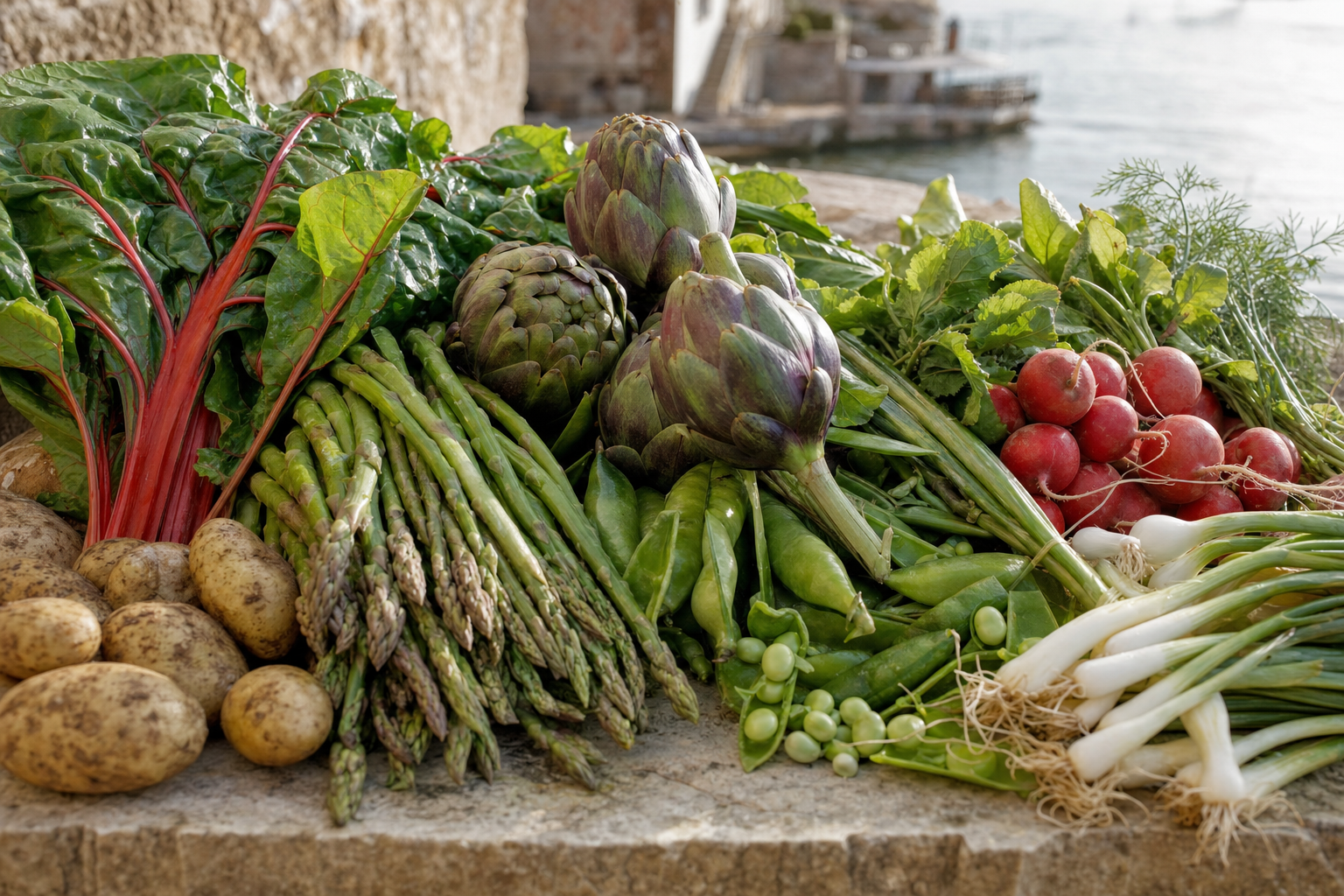
Spring arrives at different speeds
Croatia’s spring vegetable season varies by region. The warmer Adriatic coast often sees tender greens and wild asparagus earlier, while markets around Zagreb, Slavonia and other inland areas may reach their peak several weeks later. Weather also shifts the season from year to year.
From March into June, market stalls gradually move from sturdy winter produce towards fresh leaves, pods, shoots and young roots. These are some of the best spring vegetables to look for, whether you are browsing a city market, visiting a coastal town or planning meals at home.
Wild asparagus
Thin, dark green wild asparagus, known as divlje šparoge, is one of the most distinctive signs of spring along the Adriatic. It has a stronger, pleasantly bitter flavour compared with cultivated asparagus.
Snap off any woody lower ends, then cook the tender stalks briefly. They work well in risotto, pasta or a warm salad with young potatoes. Avoid collecting wild plants unless you can identify them confidently and have permission to forage; buying from an experienced market seller is the safer option.
Artichokes
Globe artichokes are especially associated with spring cooking in Dalmatia. Choose compact heads that feel heavy, with tightly closed leaves and stems that have not dried out.
A classic regional approach is to fill the spaces between the leaves with breadcrumbs, garlic and parsley, then braise the artichokes gently. They are also excellent cooked with broad beans and peas, allowing three spring vegetables to share one pot.
Broad beans
Fresh broad beans, or bob, have plump pods and a short season. Smaller beans are tender enough to use after shelling, while larger ones may benefit from a quick blanch followed by removal of their pale outer skins.
Serve them simply with olive oil, lemon and herbs, fold them through pasta, or simmer them with artichokes. When buying, look for crisp green pods without extensive dark patches. Remember that a large bag of pods produces a much smaller quantity of shelled beans.
Fresh peas
Croatian markets may offer fresh peas, called grašak, still inside their pods. The sweetest peas are small, bright and juicy. Bulging, tough pods often contain starchier peas that are better suited to soups and slow-cooked dishes.
Shell them shortly before cooking and add them near the end of a risotto, stew or vegetable braise. The empty pods can be simmered in water for a light vegetable stock, then strained and discarded.
Spring onions and radishes
Spring onions, or mladi luk, are a familiar part of Croatian spring tables. Both the white bulbs and green tops are useful: slice them into salads, scatter them over cooked beans or char them gently on a grill pan.
Peppery radishes, known as rotkvice, are another market staple. Choose firm roots with fresh-looking leaves. Serve them raw with bread, cheese and spring onions, or roast larger radishes until their flavour becomes milder.
Blitva and other leafy greens
Blitva, the Croatian name for chard, is available beyond spring but is particularly appealing when the leaves and stems are young. It is commonly cooked with potatoes, garlic and olive oil, especially on the coast.
Spring spinach, young chicory and tender lettuces are also worth seeking out. Check leafy bunches carefully: the leaves should be crisp rather than slimy, while cut stem ends should look fresh. Bitter chicory pairs well with beans, potatoes and mellow dressings.
Young potatoes
Small young potatoes, or mladi krumpir, have thin skins and a waxy texture. They do not need elaborate preparation: scrub them, leave small ones whole and roast or simmer until a knife passes through the centre easily.
Pair them with chard, asparagus or spring onions. Their skins are delicate, so keep them in a cool, dark place and use them sooner than mature storage potatoes.
How to shop at a Croatian market
Go earlier in the day for the widest choice, but focus on condition rather than perfect appearance. Seasonal produce from smaller growers may vary in size and shape.
Useful Croatian words include:
- šparoge for asparagus
- artičoke for artichokes
- bob for broad beans
- grašak for peas
- mladi luk for spring onions
- rotkvice for radishes
- blitva for chard
- mladi krumpir for young potatoes
Ask what was harvested recently and what the seller recommends cooking that day. Refrigerate peas, broad beans, asparagus and leafy greens after shopping, ideally in breathable or loosely closed packaging, and use the most delicate produce first.
Simple ways to build a spring meal
Croatian spring vegetables need little embellishment. Try braised artichokes with broad beans, risotto with wild asparagus, or blitva mixed with warm young potatoes and garlic. A plate of radishes, spring onions, bread and cheese makes an easy light meal, while peas and spinach can turn a basic soup or pasta into something distinctly seasonal.
If you would rather explore local cooking without preparing every dish yourself, check HomeChefs for meals from independent home kitchens near you. Availability varies by area, and each kitchen decides whether it offers collection, delivery or both. Look at the dish description to see which seasonal ingredients are being used.
Written with AI assistance.