What vegetables are in season in Croatia? A lunch-friendly guide
A practical seasonal guide to Croatian vegetables, with affordable ideas for office lunches, packed salads, soups, sandwiches and batch-cooked meals.
By HomeChefs Kitchen Team ·
A practical Croatian season guide
Croatia’s vegetable season varies by region. The Adriatic coast has milder winters and earlier spring crops, while Zagreb, Slavonia and other inland areas generally have colder winters and later harvests. Weather, greenhouse growing and storage also blur the boundaries, so treat this as a shopping guide rather than a rigid calendar.
Seasonal vegetables are often at their best value when they are abundant at markets, greengrocers and supermarkets. For an affordable packed lunch, start with one plentiful vegetable, add a filling staple such as beans, lentils, rice, barley or potatoes, then finish with a sharp or creamy element.
Spring: leafy greens, asparagus and young vegetables
From roughly March to May, look for:
- Asparagus, particularly along the coast and in Istria
- Broad beans and peas
- Spring onions and young garlic
- Spinach, chard and other leafy greens
- Lettuce, radishes and young carrots
- Artichokes, especially in coastal areas
- Early cabbage, kohlrabi and beetroot
Wild asparagus is prized but can be expensive. Cultivated asparagus, chard and broad beans are usually easier foundations for an everyday lunch.
For a simple packed meal, combine blanched broad beans with barley, spring onion and a lemon dressing. Chard can be cooked with potatoes, cooled and dressed with olive oil and vinegar. Radishes and lettuce work well in sandwiches, but pack wet ingredients separately to prevent the bread becoming soggy.
Summer: tomatoes, peppers and courgettes
From June through August, Croatian stalls are usually at their most colourful. Typical summer vegetables include:
- Tomatoes and cherry tomatoes
- Peppers, including sweet and pointed varieties
- Courgettes and summer squash
- Aubergines
- Cucumbers
- Green beans
- Sweetcorn
- New potatoes
- Onions and garlic
- Swiss chard, particularly near the coast
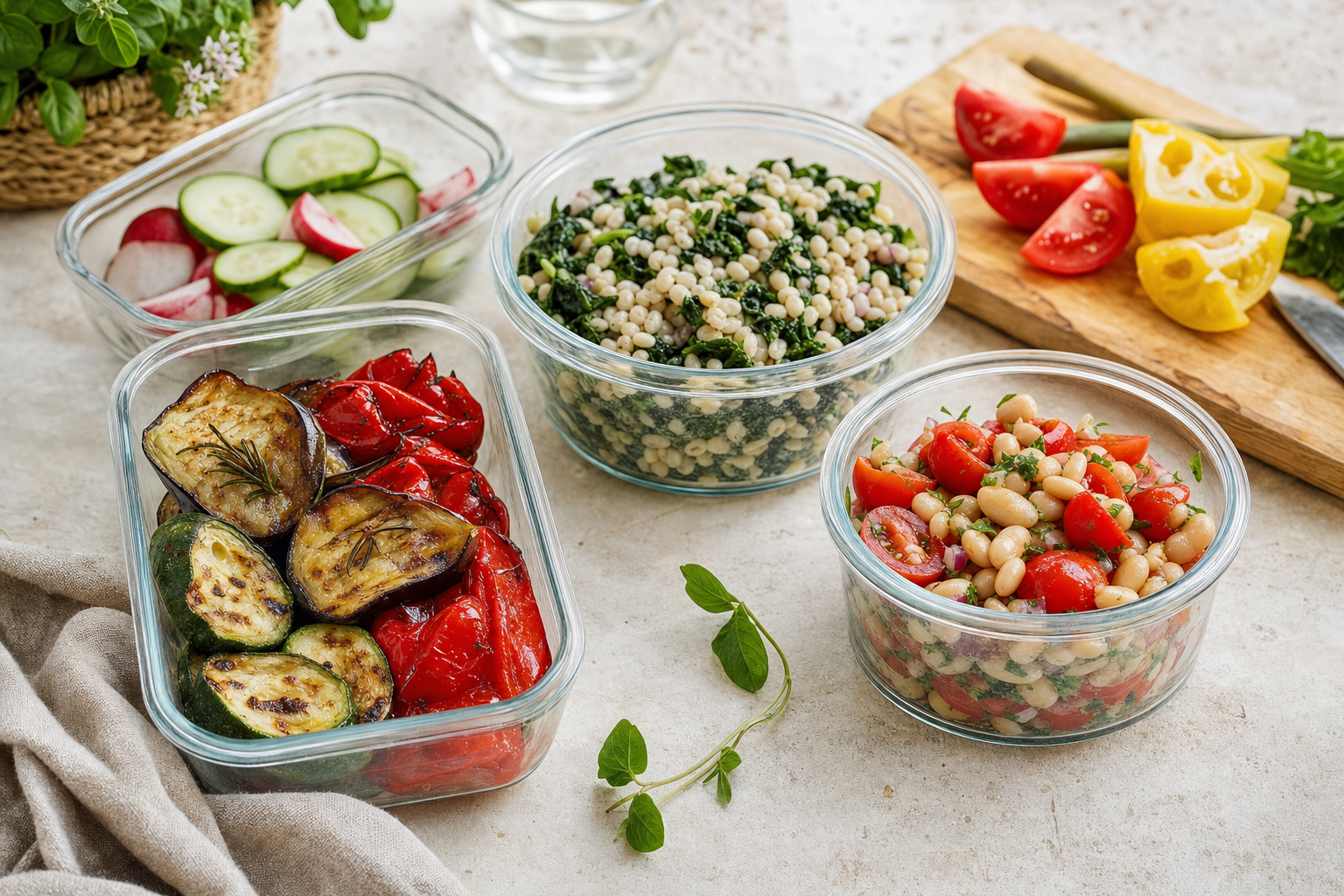
This is a useful season for low-effort lunches because many vegetables can be eaten raw or roasted together. Make a tray of peppers, courgettes, aubergines and onions, then use it across several meals: fold the vegetables into couscous, spoon them over white beans or add them to a sandwich with fresh cheese.
Ripe tomatoes need little more than salt, olive oil and vinegar. For a packed salad, keep the tomato dressing in a small separate container and mix it through just before eating. Slightly soft or irregular vegetables are good candidates for tomato sauce, vegetable stew or blended soup and may cost less than pristine produce.
Autumn: pumpkins, brassicas and root vegetables
From September into November, summer vegetables gradually give way to:
- Pumpkin and winter squash
- Cabbage, kale, cauliflower and broccoli
- Beetroot, carrots, celeriac and turnips
- Leeks and onions
- Fennel, especially in milder coastal areas
- Peppers, tomatoes and aubergines in early autumn
- Swiss chard and spinach
- Potatoes and sweet potatoes
Pumpkin is particularly useful for economical batch cooking. Roast it with onions, then turn half into a grain bowl and blend the rest into soup. Shredded cabbage also offers good value: use it raw with carrots and a mustard dressing, or cook it with beans for a substantial lunch.
Early autumn is the time to make the most of late tomatoes and peppers. They may not look perfect, but they are well suited to sauces, stews and roasted vegetable spreads.
Winter: sturdy greens and stored roots
Between December and February, fresh local choice is narrower, particularly inland, but there are still useful lunch vegetables:
- Cabbage, kale and Brussels sprouts
- Leeks and winter onions
- Carrots, beetroot, celeriac and turnips
- Potatoes
- Cauliflower and broccoli
- Spinach, chard and winter salads in milder areas
- Pumpkin and squash kept from the autumn harvest
Winter vegetables suit soups and one-pot meals that can be prepared in batches. Try a cabbage and white bean soup, roasted beetroot with lentils, or a potato and leek stew. Raw grated celeriac, carrot and cabbage also make a crisp lunchbox slaw; dress only the portion you plan to eat that day.
Stored roots are still seasonal even when they were harvested earlier. Check that they feel firm, without damp patches or extensive sprouting. With cabbage, choose compact heads and remove only the leaves you need so the remainder keeps longer.
How to spend less on packed lunches
A seasonal label does not automatically mean the lowest price. Compare the cost per kilogram and stay flexible about varieties and appearance.
- Build lunches around cabbage, carrots, potatoes, courgettes or pumpkin when these are abundant.
- Buy whole vegetables rather than pre-cut packs.
- Use tender leaves first and save sturdy roots for later in the week.
- Turn stems and usable leaves from broccoli, cauliflower or chard into soups, stir-fries or grain bowls.
- Cook one neutral batch of vegetables, then vary the dressing: lemon and olive oil, yoghurt and garlic, or vinegar and mustard.
- Ask market sellers what is most plentiful that week rather than shopping from a fixed recipe.
For packed meals containing cooked rice, beans or dairy, refrigerate them promptly after preparation. Cool hot components in shallow containers before assembling the lunch, then carry it in an insulated bag with a cold pack if there is no office fridge. Keep dressings separate until lunchtime for better texture.
Finding seasonal lunches through HomeChefs
If cooking ahead is not practical, HomeChefs can help you explore meals from independent home kitchens. Availability depends on kitchens near you, and each kitchen chooses whether to offer collection, delivery or both. Look at the dish description for seasonal vegetables, then confirm ingredients directly where dietary needs or preferences matter.
Written with AI assistance.